Finding the right direction in your professional life can feel overwhelming. Many professionals struggle with a common dilemma: how to choose a career path that offers both financial stability and personal satisfaction. Without a clear career development plan, it is easy to feel stuck in a loop of stagnant jobs.
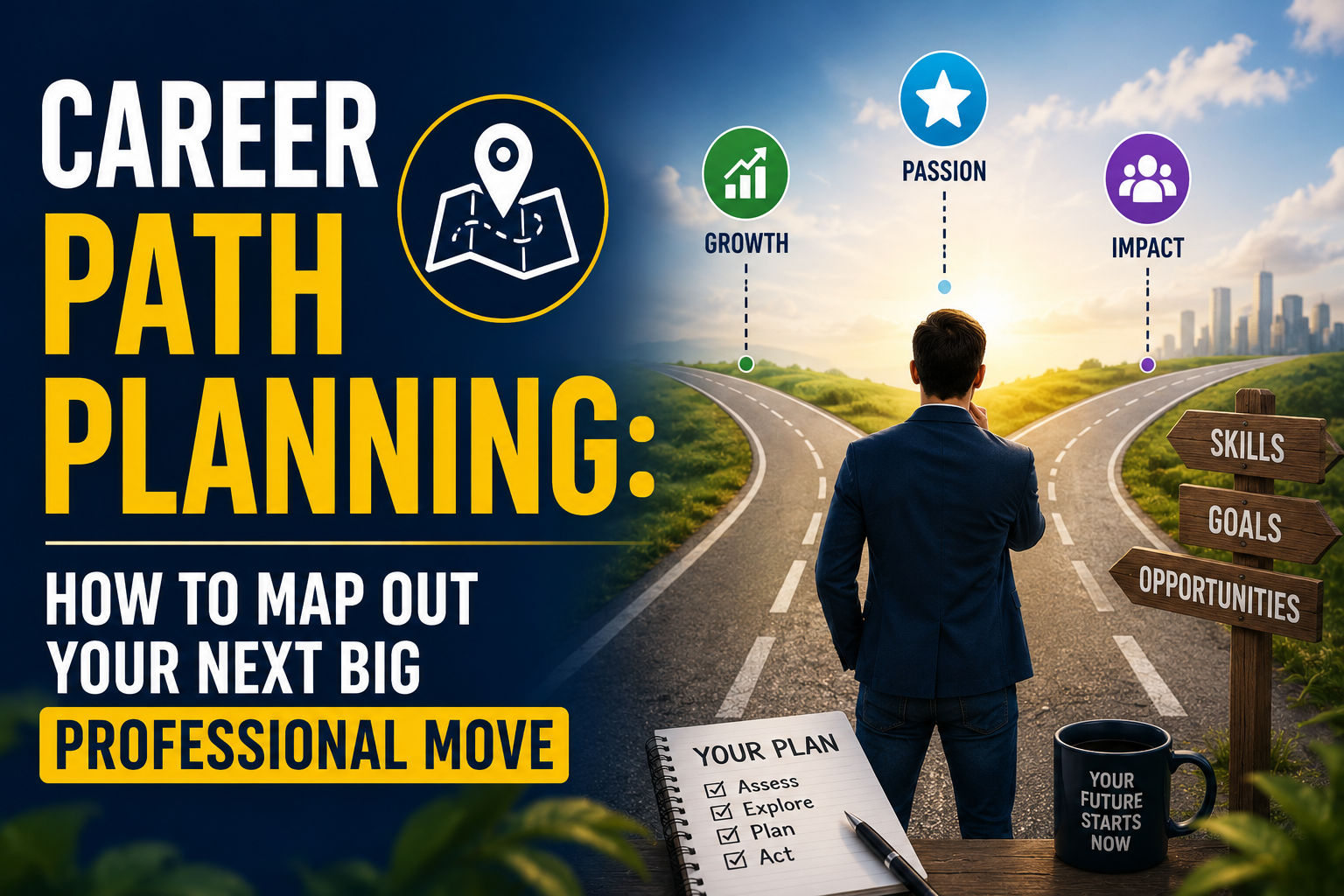
Building a fulfilling profession does not happen by accident. It requires a deliberate, step-by-step approach to career path planning. Whether you are a student exploring options, a fresher entering the job market, or an experienced professional looking for a pivot, this comprehensive guide will show you exactly how to build a successful career from scratch.
What is a Career Path and Why Does It Matter?
A career path is a structured sequence of jobs, roles, and achievements that move you closer to your ultimate professional goals. It is not just about getting your next job; it is about charting a long-term roadmap.
Understanding how to find my career path is essential because it prevents aimless job-hopping. When you have a solid career path strategy, every position you accept becomes a stepping stone, helping you acquire specific skills, expand your network, and increase your earning potential over time.
Core Steps to Create a Career Path
Designing a roadmap requires honest self-reflection and market research. If you want to know how to map out a career path effectively, follow these fundamental steps to create a career path:
Self-Assessment
Before looking outward at the job market, look inward. Identify your core strengths, technical skills, weaknesses, and values. Ask yourself:
-
What tasks energize me?
-
What industries align with my personal values?
-
What are my salary expectations?
Using a formal career planning questionnaire can be highly effective during this stage to narrow down your natural inclinations.
Research Industries and Roles
Once you know your strengths, research roles that match them. Look at emerging industries, job market stability, and future growth projections.
Define Clear Milestones
A roadmap needs destinations. Break your journey down into realistic milestones. Knowing how to plan your career goals involves balancing what you want to achieve right now with where you want to be in a decade.
-
Short-Term Goals: Gaining a specific certification, mastering a software tool, or securing an entry-level role.
-
Long-Term Goals: Reaching a managerial position, launching a business, or transitioning into a highly specialized niche.
Balancing Short-Term and Long-Term Career Goals
To maintain momentum, your daily efforts must align with your ultimate vision. Let’s look at practical short term and long term career goals examples to understand how they work together:
| Goal Type | (Tech Focus) | (Management Focus) |
| Short-Term Goal | Learn Python and earn an AWS Cloud certification within 6 months. | Lead a small project team and improve public speaking skills this year. |
| Long-Term Goal | Become a Chief Technology Officer (CTO) or Principal Cloud Architect. | Transition into a Senior Director of Operations role within 7 years. |
By achieving your short-term objectives, you naturally build the resume and credibility required to unlock your long-term ambitions.
Career Guidance for Beginners and Students
If you are just starting, the professional world can look like a maze. Knowing how to choose a career path for college students early can save years of trial and error.
Career Options After Graduation
The period immediately following graduation is critical. Instead of picking the first job that comes your way, evaluate different career options after graduation based on growth potential rather than just the starting salary. Focus on roles that offer robust mentorship and training programs.
Navigating the “No Experience” Paradox
The biggest hurdle for freshers is the classic paradox: You need experience to get a job, but you need a job to get experience.
If you are wondering how to start a career with no experience, shift your focus to building a portfolio. Freelancing, open-source contributions, internships, and personal projects are concrete ways to prove your capabilities to hiring managers. This initial phase serves as your unofficial career guidance for beginners.
Navigating Career Changes and Transitions
It is a myth that you must stick to the choice you made in your early twenties. Thousands of professionals successfully alter their trajectories later in life.
How to Change Career Paths at 30 or 40
Switching industries later in life requires a tactical approach. When figuring out how to change career paths at 30 / 40, your biggest asset is your transferable skills. Leadership, project management, communication, and problem-solving are valuable in every single sector.
Instead of starting completely from scratch, look for a bridge role—a position that combines your past experience with your new target industry.
Creating a Career Transition Plan
Do not quit your current job abruptly. A successful switching career paths guide relies on a gradual shift. Use a structured career transition plan template to manage your pivot:
-
Skill Gap Analysis: Identify what skills your new industry requires and start learning them through online courses or evening classes.
-
Financial Buffer: Save at least 3 to 6 months of living expenses to alleviate pressure during the transition.
-
Targeted Networking: Connect with professionals already working in your target field via LinkedIn to understand the ground reality.
-
Rebrand Your Profile: Update your resume and portfolio to highlight the specific skills relevant to your how to choose a new career path strategy.
Tools, Templates, and Resources for Mapping Success
You do not have to design your roadmap on a blank sheet of paper. Utilizing structured resources simplifies the entire process.
-
Career Path Template Word / Excel: A simple, offline tracking sheet where you can list your target job titles, required certifications, and deadliness for annual review.
-
Career Roadmap Builder Online: Interactive digital platforms that allow you to input your current position and visualize the exact promotional steps needed to reach executive levels.
-
Career Path Mapping Tool: Software used by HR professionals and career coaches to trace standard industry trajectories, showing you typical lateral and vertical moves within major sectors.
Frequently Asked Questions (FAQ)
Q1. What is the best way to choose a career path if I have multiple interests?
The best approach is to find the intersection of your skills, interests, and market demand. Look for interdisciplinary fields. For instance, if you love both writing and technology, a career path in technical writing or SEO content marketing could be a perfect match.
Q2. How often should I update my career development plan?
You should review your plan at least once a year. The job market shifts rapidly due to technological advancements, and your personal goals might change as you gain more real-world experience.
Q3. Can I use a career roadmap builder online for free?
Yes, there are several platforms and open-source templates available online that let you map out your professional trajectory without any cost. Standard spreadsheets work exceptionally well for this too.
Q4. Is it too late to switch careers at 40?
Absolutely not. Many successful professionals make major pivots at 40 and beyond. The key is leveraging your decades of professional maturity and combining it with modern upskilling.